Permanent Change In Narrative and Diane Nguyen

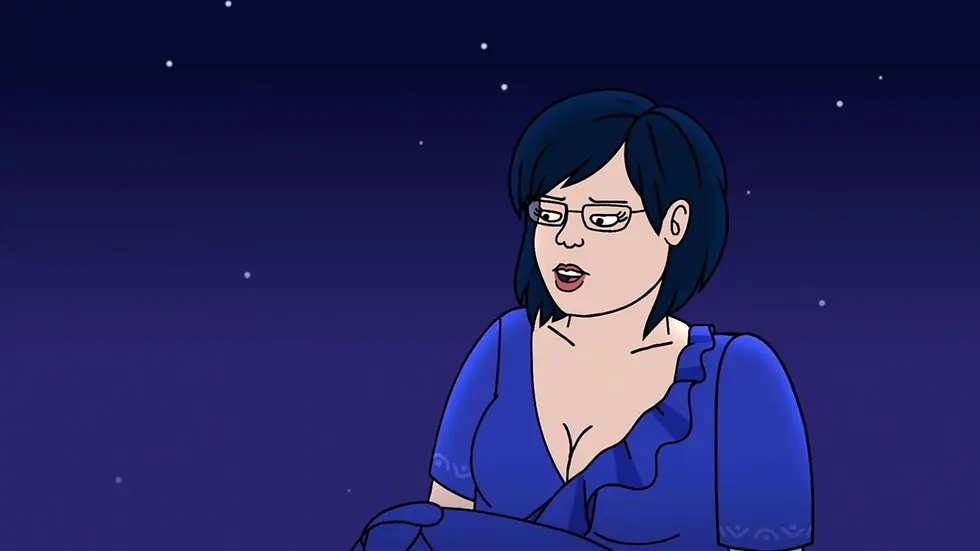
I have a short opinion piece today that I thought about a few nights ago. It’s something that I think I’m not qualified at all to write about, which might be a point in itself. Maybe I deserve to give it a go because I have an opinion, and whether that’s right or wrong is up to the reader. I thought I’d write about Bojack Horseman, and specifically how Diane Nguyen is viewed towards the end of the show. It was interesting to see a large figure on a character and for it not to be played as a joke. I thought it was important for all the people who might not get the representation they deserve, and as a writer trying to write believable characters.
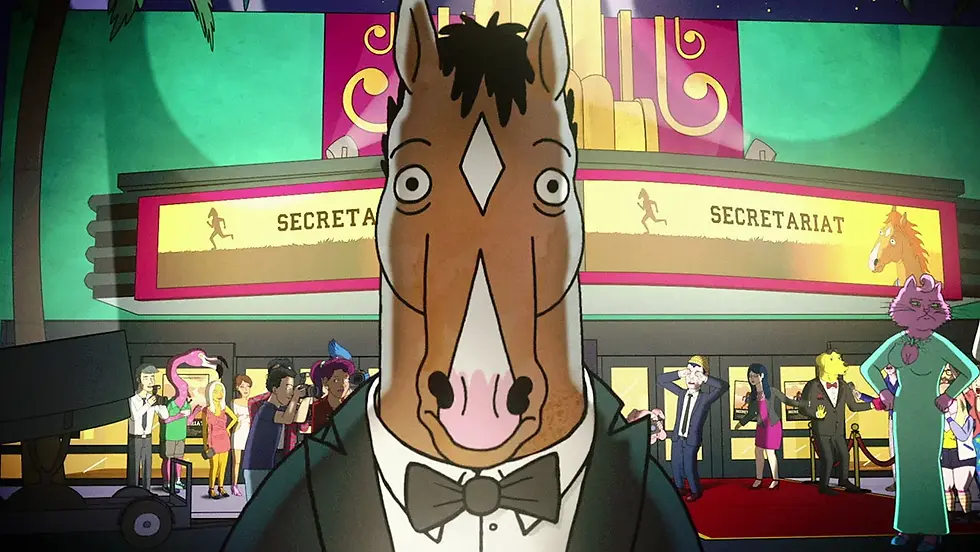
There’s probably hundreds of opinion pieces you could write about Bojack Horseman, which was primarily written by Raphael Bob-Waksberg from its premiere in 2014 to its final episode in 2020. It’s such an unbelievably dense show about celebrity abuse of power, masculinity, drug use, and a strong focus on female characters. It’s actually the only TV show I’ve ever re-watched, since there really is so much to chew on with what it says. That’s why I want to talk about this today, just because it’s both an excuse to talk about a favourite show and a good chance to talk about something I find fascinating.
I love when characters have a proper transformation in their medium, one that withstands the rest of the runtime. Whether a character changes a hairstyle, or a piece of clothing, it shows a nice commitment to a realistic narrative. People change in real life. People go through awkward phases with their hair, and people try out makeup that they may or may not like. It’s just a natural part of life. People also change body shapes and sizes. I know how that feels. I’ve spent my entire life being as skinny as a bone, until a recent look in the mirror made me cry at the clothing store. Again, it’s just a part of life, and it happens to everyone in some way or another.
In storytelling, it feels like writers try to steer away from permanent changes. The first thing that I’m reminded of is the theory of Chekov’s Gun. The theory revolves around a theatre play that introduces a gun, and therefore it tells the audience that the gun must be used at some point. It bleeds into all narratives, that if something is introduced then it must have a pay off later. Imagine a character gets handed a weapon, then imagine them just not using it throughout the story. Imagine a character gets told about something mysterious happening at the local bar, and they go to find absolutely nothing and then the story ends. It would absolutely suck. I think writers feel like changing a character’s appearance, like changing a person’s hairstyle, means that they have to write it into the story with an explanation. Real life isn’t like that though. People can just do things for no reason.
Diane Nguyen, in Bojack Horseman, is a character with so much depth. We witness a woman who tries her best to be happy, whether that’s through dating, or trying to find her passion, or reconnecting with her heritage, and it’s a beautiful journey. It’s also a very human journey, because who isn’t trying their best to be happy? In the last season of the show, we see Diane return as a larger woman and it’s not a big deal. There’s a brief conversation and we move on. It’s not some deep, complex side-plot, and I’m glad it was written this way because to do something else would be to ruin the nuance of a well written character moment.
Anyway, I don’t think I have an actual point. I think it’s cool to see a character transform in a permanent way, because we, as humans, also transform in permanent ways. I also think Diane Nguyen is one of my favourite characters of all time. She’s great.
If you are still reading this, then you’re great too.


Comments